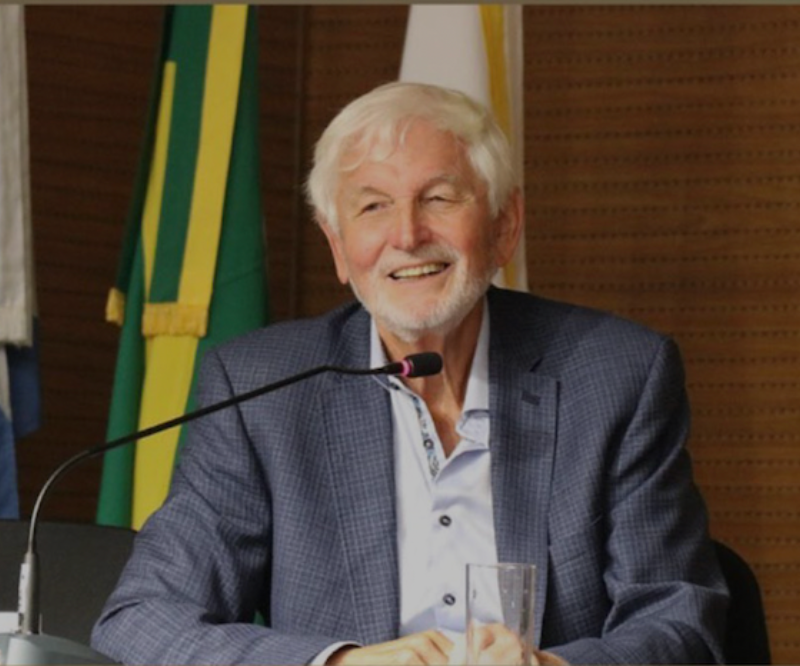
As someone who has spent a career bridging the chasm between rigid state bureaucracies and dynamic, customer-focused private enterprises, I am thrilled to recommend the work of Oxford Business Masters. My own journey—from the functional mediocrity of British Rail's state-owned era to leading global transformations in privatized rail giants like ADTRANZ and Daimler Chrysler—has taught me the profound impact of shifting from inward-looking processes to outward-facing results. It's a lesson that resonates deeply with the challenges facing democracies today, as I explore in my trilogy on saving democratic governance from authoritarian drift.
Marcos Barros (the CEO of OBM) and I first crossed paths through our shared passion for dismantling bureaucratic chains, culminating in our co-authored book, Breaking the Chains of Bureaucracy. In it, we detailed proven strategies for reorganising state sectors into agile, accountable entities. But Marcos's expertise in Objectives and Key Results (OKRs) takes this a step further, offering a precise toolkit for public organisations to align ambitions with actionable outcomes. His Brazilian roots and international experience make him uniquely positioned to adapt this framework—born in the high-octane world of tech—to the often labyrinthine public domain.
In 2022, I had the privilege of traveling to Brazil with Marcos to witness firsthand the transformative work at the Public Ministry of one of the largest states in the country. What I saw was nothing short of inspiring: a public prosecutor's office that had embraced OKRs to execute their strategic plan with remarkable efficiency. Teams that once navigated red tape and siloed inertia were now driving measurable progress—reducing case backlogs, enhancing public trust, and delivering justice more swiftly. It was a vivid demonstration of how OKRs can empower civil servants to bypass outdated structures, focus on citizen needs, and achieve real impact, even in resource-constrained environments.
Marcos demystifies OKRs, from building robust architectures and conducting effective check-ins to integrating them with project management, risk assessment, AI, and systems thinking. He confronts the pitfalls—the double-edged sword of metrics and human behavioural quirks—with candour and practical wisdom. Drawing on real-world examples from Brazil and beyond, he shows how public entities can close the execution gap, foster innovation, and restore democratic credibility.
In an age where democracies grapple with rising debts, inefficient services, and eroding trust, OKRs for the Public Sector is a beacon of hope and a call to action. Embrace it and watch your organisations soar.
Chris Sheppard
C.Eng, FIMechE, BSc
Former Global President of Daimler Chrysler Rail Division
Author of Saving Democracies